Why create a Personal Brand
Why create a Personal Brand?
Why create a Personal Brand
Why a personal brand matters now
What a strong personal brand does for you
The core of your personal brand
How to build a personal brand (step by step)
Step 1: Define your positioning
Why images matter so much in personal branding
Types of images every personal brand needs
1. Your primary headshot (or hero image)
How to choose the right images for your brand
Practical steps to dial in your visual brand
Step 1: Clarify your visual vibe
Step 3: Align across platforms
A personal brand is how the right people find you, remember you, decide to follow you and work with you. It is the bridge between what you care about and the tribe you are trying to build, whether that is clients, collaborators, fans, or a future audience that has not met you yet.
For anyone in business for themselves, aspiring founders, creators, influencers, and community builders, a personal brand is not optional anymore. It is infrastructure.
Below is an inspiration-to-practical-to-inspiration flow you can use as a guide to building your personal brand.
Why a personal brand matters now
The world is full of people doing what you do. Coaches, designers, consultants, realtors, content creators, makers, solopreneurs, the internet has given everyone a stage. The question is no longer, “Can I get online?” It is, “Why would anyone choose me?”
That is where personal branding comes in. Your personal brand is:
The story people tell about you when you are not in the room.
The feeling someone gets after scrolling your profile.
The reason a client thinks, “I want this person, not just anyone.”
You might be building:
A coaching practice
A creative studio
A content driven business
A consulting or freelance career
A movement, community, or cause
In every case, your personal brand is the magnet. It attracts the people who resonate with your values, your point of view, and the way you show up.
You already have a personal brand. People already have impressions of you. The question is: do you want that to happen by accident, or on purpose?
What a strong personal brand does for you
For brand builders, a clear personal brand:
Makes you discoverable
People can find you for specific problems, topics, and values. You show up in the right searches, direct messages, and referrals.Builds trust before you ever meet
When your message, content, and visuals are coherent, you feel like a real, trustworthy human, not just another profile picture.Filters opportunities for you
Your brand acts as a gate. The right people lean in, the wrong people self select out. Over time, you get more of the work, audience, and collaborations you actually want.Gives you leverage
With a visible personal brand, you are no longer starting from zero every time you launch something new, such as a course, a podcast, a new offer, or even a new business. Your existing audience and reputation come with you.Creates belonging for you and your people
A tribe is not just followers. It is people who see themselves in your story. Your brand gives them language, visuals, and a shared identity to gather around.
The core of your personal brand
Before we get to the images, you need some foundations. Think of your personal brand as four connected pieces:
Who you are
Who you serve
What you stand for
How you show up
Ask yourself:
What do I actually care about in my work?
Who do I want to help or lead, as specifically as I can?
What am I willing to take a stand on?
When someone experiences me online, what do I want them to feel? Inspired? Safe? Challenged? Energized?
You do not need a perfect mission statement to start. But clarity, even imperfect clarity, will make every other decision easier, from your content topics to your images.
How to build a personal brand (step by step)
Step 1: Define your positioning
Positioning is deciding, “This is what I want to be known for.”
For example:
“I help first time founders go from fuzzy idea to launch.”
“I help creatives get paid what they are worth.”
“I show solopreneurs how to use storytelling to grow their audience.”
Good positioning is:
Specific enough that someone can immediately think, “That is me.”
Narrow enough that your content does not try to be about everything.
True enough that you can actually live it, not perform it.
Write one sentence that captures what you do and for whom. It does not have to be perfect, but it has to be honest.
Step 2: Choose your home base
As a brand builder, you do not need to be everywhere. You need:
One home base, such as a website, newsletter, or main platform like YouTube or a podcast.
One or two discovery platforms, often Instagram, TikTok, LinkedIn, or Twitter or X. The discovery platforms drive people to your main content.
Where you will almost always show up, though, is:
LinkedIn for credibility and search, or...
Your main social platform where your tribe actually hangs out
Your own site or landing page where you can tell your full story
Make sure each of those has:
A clear headline or bio that says who you help and how.
A short about section that tells your story in a human way.
A way to take the next step, such as follow, subscribe, book, buy, or contact.
And front and center on all of those: your images.
Why images matter so much in personal branding
For your audience, especially online, images are often the first touch. Before they read your carefully crafted bio or your best thread, they see your face, your vibe, and the world around you.
Images:
Humanize you. Your audience wants to know there is a real person behind the screen.
Signal your positioning. Your style, environment, and expressions say a lot about what you do and how you do it.
Create consistency. Seeing the same, strong visual identity across platforms makes you feel established and intentional.
You do not need to look like a model or have a designer wardrobe. You need to look like the most aligned, intentional version of you.
Types of images every personal brand needs
Think of your visual brand in layers. At a minimum, most brand builders need:
A primary personal brand headshot
A small set of in action images
A bank of supporting visuals
1. Your primary headshot (or hero image)
These are the photos that show up on:
Your website hero section
Profile pictures, such as LinkedIn, Instagram, TikTok, podcast art
Speaker bios, guest posts, or media features
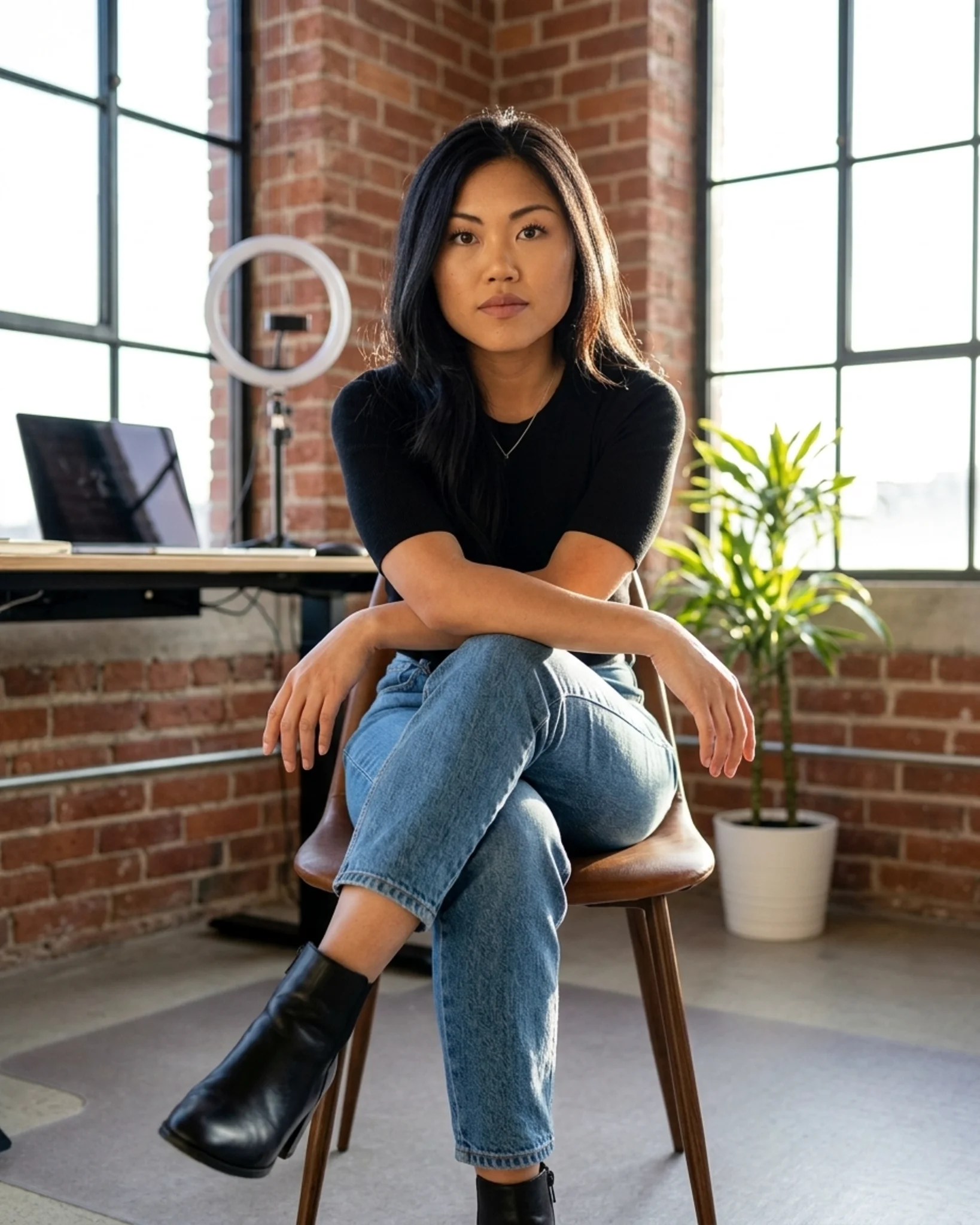
A strong personal brand headshot:
Clearly shows your face, without sunglasses, tiny crops, or group photos.
Matches your brand energy, whether that is calm, bold, playful, polished, creative, or something else.
Fits your audience and industry, since a wellness coach and a fintech founder can both look professional, but in very different ways.
AI headshots can be a powerful way to quickly get on brand portraits that you can use across your platforms, especially when you are starting or refreshing your brand. With VeraLooks, for example, the goal is not just a nice picture, but a headshot that feels like it could have been taken on your most confident day: well lit, realistic, flattering, and aligned with how you want to be seen.
2. In-action images
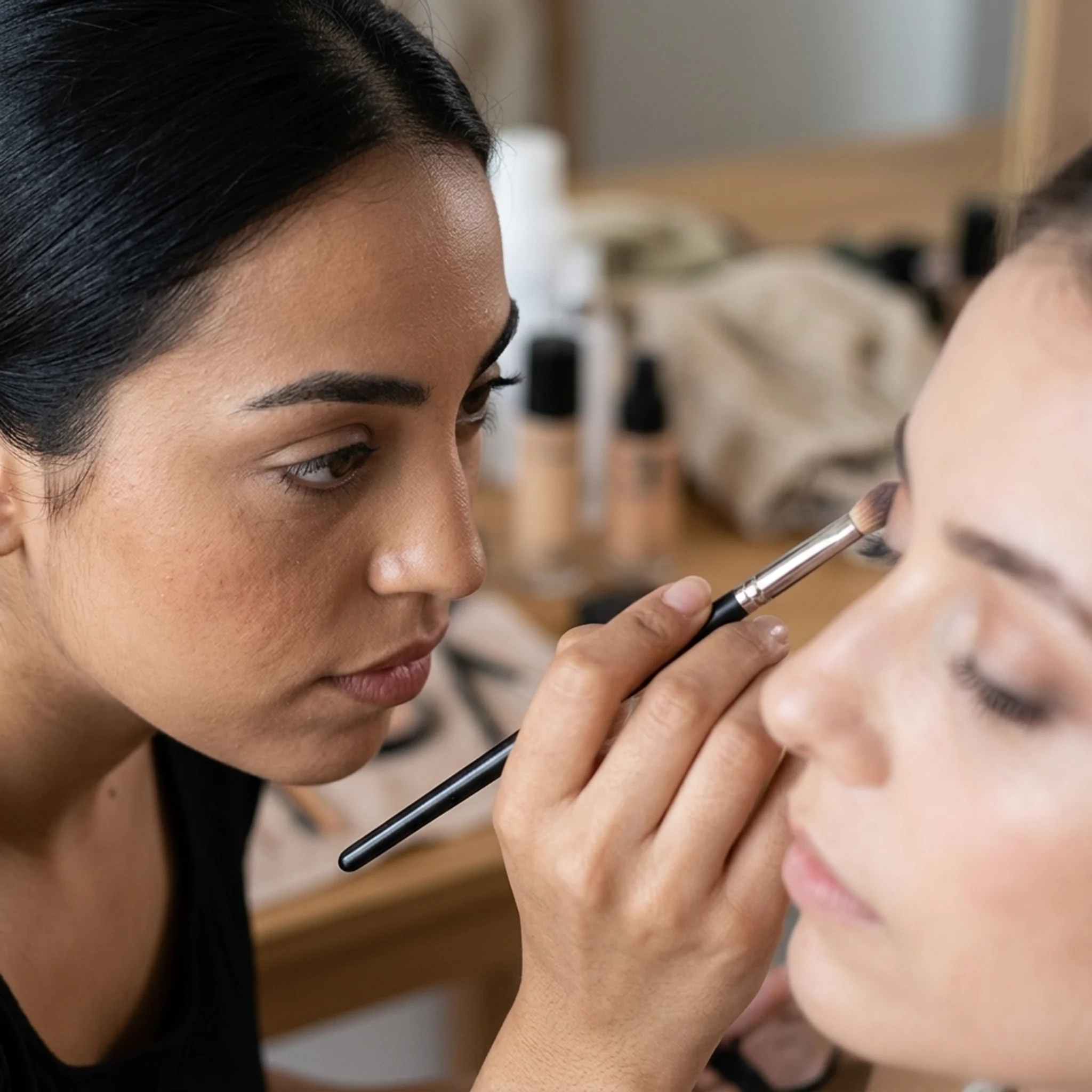
These are the photos that show you doing your thing. For a brand builder, these might include:
You speaking, teaching, or consulting.
You at your workspace, such as with a laptop, notebook, whiteboard, or studio.
You interacting with clients, collaborators, or your environment.
In-action shots answer the question, “What does this person actually do?”
If you are using AI, this is where details really matter. The setting, props, wardrobe, and composition should all support your brand story. That is exactly why VeraLooks includes a Personal Brand Shot List Generator, so you are not just guessing.
By telling the app what you do, such as coach, designer, consultant, creator, and so on, through a simple fill in the blank template, you get back a tailored list of image ideas:
Poses and scenarios that match your role.
Environments that make sense for your work.
Visual themes that reinforce your message.
Instead of thinking, “I need some photos,” you get, “I need an image of me reviewing a client strategy on a laptop in a modern workspace, plus one of me on stage, plus one of me brainstorming on a whiteboard,” and then you can generate or shoot on purpose.
3. Supporting visuals
These are smaller, but they still matter:
Detail shots, such as tools of your trade like camera, podcast microphone, sketchbook, screen, or books.
Lifestyle touches, such as coffee shop, city, nature, or studio, whatever fits your brand.
Backgrounds and textures you can reuse in graphics, slides, or social posts.
Over time, these supporting images become the visual vocabulary of your brand. Your audience starts to recognize your look before they even see your name.
How to choose the right images for your brand
When you are deciding which images to create, whether via AI, with a photographer, or both, use these questions as a filter:
Does this look like the person I want my audience to meet?
Not the perfect version of you, but the version that feels honest and aspirational.Does this image make sense for what I do?
If you are a mindset coach, images of you in deep conversation or reflective poses might make sense. If you are a product designer, sketching or workshopping fits better than a generic suit and tie.Does this support the feeling I want my brand to create?
Calm, safe, and held? Bold, disruptive, and energetic? Warm, collaborative, and welcoming?Would I be proud to see this on a big screen, slide deck, or feature?
Your future self will thank you for thinking bigger than “just an avatar.”
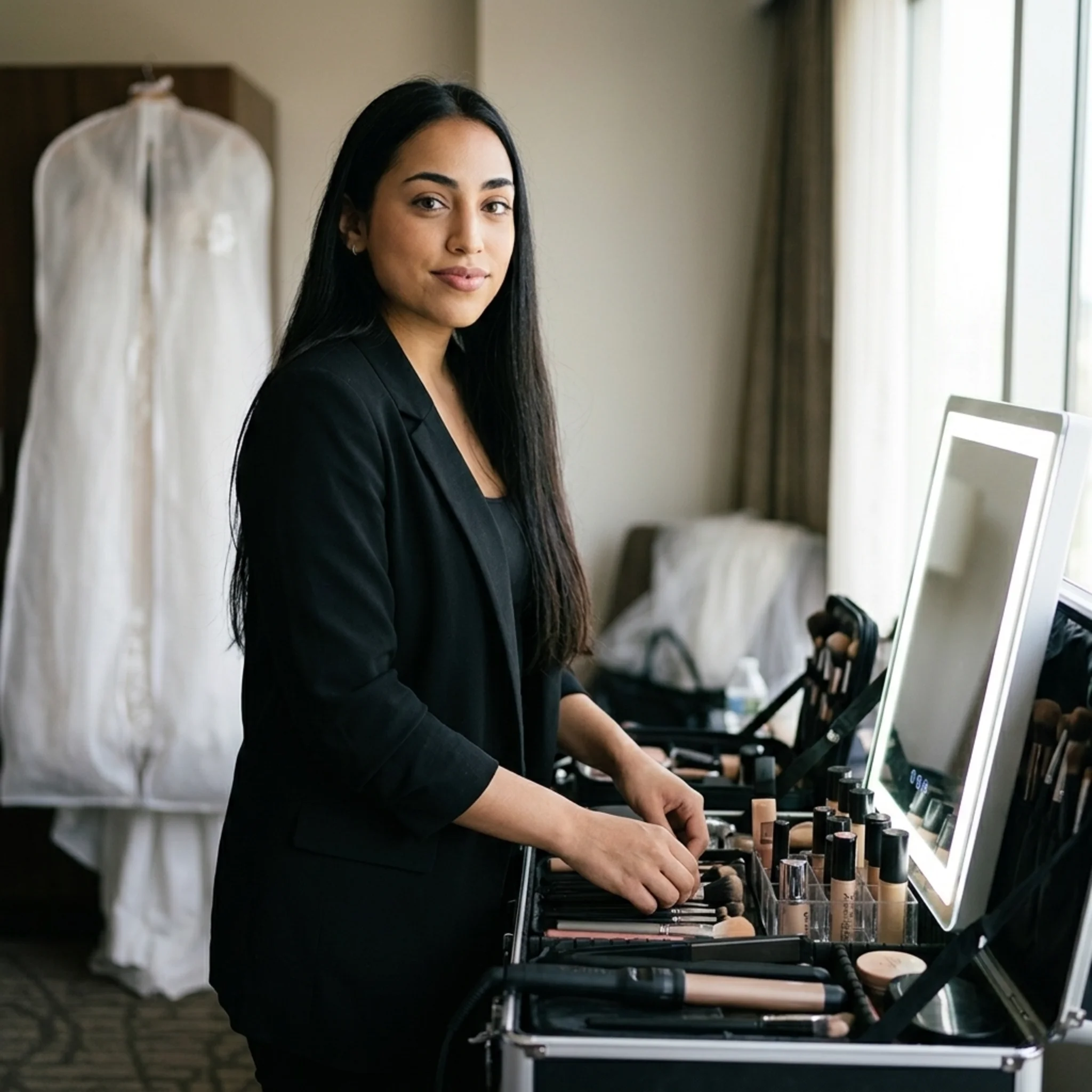
This is where tools like the Personal Brand Shot List Generator are so valuable. They help you translate abstract ideas, such as “I am a creative strategist for founders,” into concrete, visual scenes, such as “Sitting with a founder at a table, pointing at a deck,” “brainstorming on sticky notes,” or “presenting ideas on a screen.”
Practical steps to dial in your visual brand
Here is a simple, action oriented process you can follow:
Step 1: Clarify your visual vibe
Write down three to five words that describe how you want your brand to feel. For example:
Grounded, warm, thoughtful
Bold, energetic, disruptive
Polished, calm, strategic
Playful, creative, approachable
These words will drive your choices in:
Clothing, such as colors, formality, and textures
Backgrounds, such as minimal versus busy, nature versus urban, studio versus real world
Expression, such as big smiles, soft smiles, serious, or contemplative
Step 2: Make your shot list
Instead of randomly grabbing or generating images, make a plan. For example, aim for:
One to two strong hero headshots
Three to five in action scenes
Five to ten supporting, lifestyle, or detail images
If you are using VeraLooks, you can plug your role and brand direction into the Personal Brand Shot List Generator, let it suggest specific ideas, and then:
Generate AI headshots and on brand images directly.
Use the list as a brief for an in person photoshoot later.
Do both, using AI for experimentation and web or social content, and real shoots for cornerstone assets such as website, press, and key speaking gigs.
Step 3: Align across platforms
Once you have your images:
Use the same or a very similar headshot across your main platforms.
Choose a small set of in action and supporting images to repeat in websites, media kits, and slide decks.
Avoid mixing radically different styles, for example one ultra polished, one super grainy, and one heavily filtered, unless that contrast is a deliberate part of your brand.
Step 4: Refresh regularly
Your brand is a living thing, and your visuals should evolve with it.
Update your primary headshot every one to two years, or whenever your look or direction changes significantly.
Add new in action images as you launch offers, speak, or explore new formats.
Revisit your shot list when your positioning or niche shifts.
With AI tools and a generator like VeraLooks, this refresh cycle becomes faster, easier, and more playful. You can test ideas visually before committing to a big production.
Balancing authenticity and aesthetics
There is a fear many creators and business owners have: “If I polish my brand too much, I will look fake.” On the other hand, there is the fear of looking unprofessional or small time if everything is too casual.
The sweet spot is this:
True to you, elevated for your audience.
That means:
You still look like yourself, not like a different person.
Your visuals are clean, intentional, and thoughtfully crafted.
The aesthetic serves the message and does not distract from it.
AI can absolutely be used in a way that honors authenticity. Used well, it becomes a way to:
Explore visual directions quickly.
Create multiple variations for different contexts, such as LinkedIn versus Instagram versus a sales page.
Give early stage brand builders access to strong imagery before they are ready for a full scale shoot.
When you are ready to work with a photographer, the images and shot lists you have already created can act as a creative brief. You walk into that session with clarity instead of having no idea what you want.
Your personal brand is your leverage
If you are building something, whether an audience, a business, a movement, or a body of creative work, your personal brand is the runway. It is what lets people:
Recognize you
Trust you
Choose you
Follow you from one chapter of your journey to the next
You do not need permission to start. You do not need the perfect niche or a forty page brand strategy. You can begin with:
A clearer sense of who you serve and how
A few honest, strong images that look and feel like you
A willingness to show up consistently and let people see the real work you do
Tools like VeraLooks exist to make that process easier and more accessible, especially the parts that usually feel intimidating, such as “I need good photos but have no idea what kind or where to start.” The Personal Brand Shot List Generator is designed for exactly that moment. You bring your story, your role, and your vision for the tribe you want to build. It helps you turn that into concrete, visual ideas and then into images that support everything you are creating.
At the end of the day, your personal brand is not about aesthetics for their own sake. It is about connection. It is about the people on the other side of the screen who will feel less alone, more seen, and more willing to take action because you chose to step forward as yourself, on purpose.
Start where you are. Clarify your story. Choose your images with intention. Let your personal brand become the invitation your future tribe has been waiting for.
